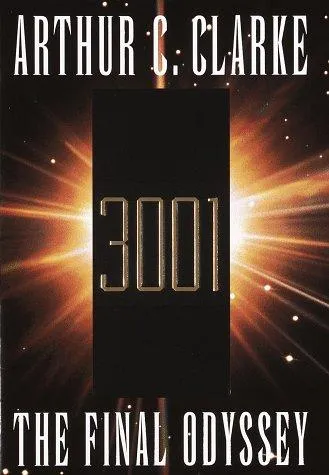
3001: Audiobook
According to The Books Insider's catalog data, the 3001 audiobook runs an estimated 8.2 hours (about 5.5 hours at 1.5× playback speed).
The instrumentWhen will you finish it?
Based on 8.2 hours of listening (estimated).
| Your pace | You'll finish in |
|---|---|
| 30 min / day | 17 days |
| 1 hour / day | 9 days |
| 2 hours / day | 5 days |
| 1 hour / day at 1.5× | 6 days |
You'll finish in–by –
Part of The Audiobook Finish-Time Calculator: the same instrument for any of the 2,187 audiobooks we measure.
What our data says
- At 8.2 hours (estimated), it's shorter than 70% of the science fiction audiobooks we measured.
- That's 25% shorter than the average science fiction audiobook (10.9 hrs across 820 titles in our dataset).
Computed from science fiction audiobooks in The Books Insider dataset (build ); listening time estimated from page count. Methodology.
Who is this for?
Best for science fiction listeners: a solid week of commutes at 8.2 hours (estimated).
About the book
In 3001: The Final Odyssey, Arthur C. Clarke brings the greatest and most successful science fiction series of all time to its magnificent, stunningly unforeseen conclusion. As we hurtle toward the new millennium in real time, Clarke brilliantly, daringly leaps one thousand years into the future to reveal a truth we are only now capable of comprehending. An epic masterpiece at once dazzlingly imaginative and grounded in scientific actuality, 3001 is a story that only Arthur C. Clarke could tell.
How to listen to 3001 free
New members at audiobooks.com get three free audiobooks with the trial.
Separately, the store's catalog carries more than 10,000 audiobooks that are always free to stream.
Start listening freeQuestions listeners ask
How long is the 3001 audiobook?
3001 runs about 8.2 hours, our estimate from its 276 pages at a typical narration pace. At 1.5× speed that drops to roughly 5.5 hours.
Is the 3001 audiobook free?
Yes, for new listeners: the trial starts you with three free audiobooks.
When was 3001 first published?
3001 by Arthur C. Clarke was first published in 1997.


